
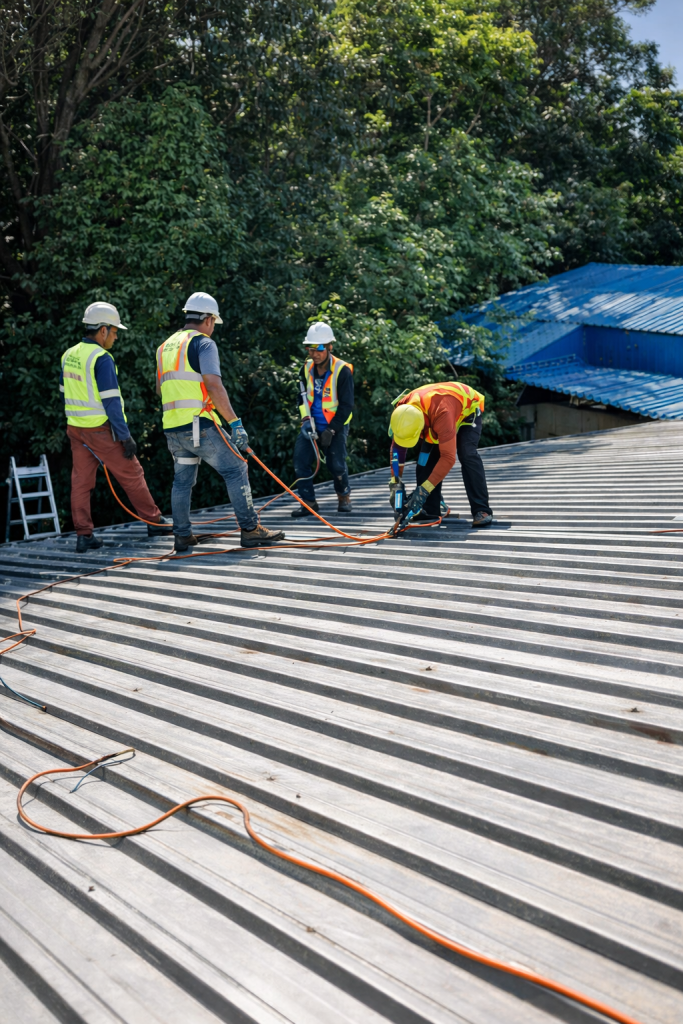
Warehouse Roofing
Warehouse roofing is essential for protecting your inventory and equipment from weather elements while maintaining energy efficiency. With various materials like metal and membrane options, you can choose one that suits your needs and budget. Regular maintenance guarantees durability and helps you avoid costly repairs down the line. By investing in quality roofing, you safeguard your goods and reduce energy costs. There’s much more to explore about warehouse roofing options and their benefits.
Importance of Warehouse Roofing
When you think about a warehouse, it’s easy to overlook the roof, but it plays an essential role in protecting your investment. A well-maintained roof safeguards your inventory and equipment from the elements, preventing costly damages from leaks or extreme weather. It helps regulate temperature, ensuring ideal conditions for stored goods, which can save you on energy costs. Furthermore, a sturdy roof enhances your building’s structural integrity, reducing the risk of costly repairs down the line. By investing in high-quality roofing, you’re not just protecting your assets; you’re also maintaining the overall value of your property. Ultimately, a reliable roof is vital for the functionality and longevity of your warehouse, making it a top priority for any business owner.
Types of Roofing Materials
When choosing roofing for your warehouse, you’ll want to evaluate the benefits of different materials. Metal roofing options offer durability and longevity, while membrane roofing solutions provide excellent waterproofing. Each choice has its advantages, so let’s explore what fits your needs best.
Metal Roofing Options
While considering options for your warehouse roofing, metal roofing stands out as a durable and versatile choice. You’ll find several types of metal roofing materials to suit your needs. Steel roofing, for instance, offers strength and longevity, while aluminum is lightweight and resistant to corrosion. Copper, though more expensive, adds aesthetic appeal and can last over a century. Galvalume combines steel’s strength with a protective coating, making it a popular option. Each type comes in various styles and finishes, allowing you to customize your warehouse’s look. Plus, metal roofing reflects sunlight, which can help reduce energy costs. With minimal maintenance and impressive lifespans, metal roofing is a smart investment for any warehouse owner.
Membrane Roofing Solutions
Membrane roofing solutions offer a flexible and efficient option for warehouses looking to maximize durability and performance. These systems primarily consist of materials like TPO, PVC, and EPDM, each providing unique benefits. TPO is known for its energy efficiency, while PVC offers excellent resistance to chemicals and fire. EPDM, on the other hand, excels in longevity and flexibility, making it ideal for various climates.
When selecting a membrane roofing solution, consider factors like climate, budget, and installation requirements. Proper installation is essential for performance, so working with experienced professionals is important. Additionally, routine maintenance will extend the life of your roof, ensuring you get the most value. Choose wisely, and you’ll enjoy a reliable, long-lasting roofing solution for your warehouse.
Energy Efficiency Considerations
As you explore energy efficiency in warehouse roofing, you’ll find that the right materials and design choices can greatly impact your building’s overall performance. Opting for reflective roofing materials can reduce heat absorption, keeping your warehouse cooler and lowering cooling costs. Insulation plays a vital role too; proper installation can minimize energy loss, ensuring your heating and cooling systems work efficiently. Consider incorporating green roofing systems that promote natural insulation and stormwater management. You might also want to look into solar panel installations, which can provide sustainable energy and reduce dependency on external sources. Finally, designing for natural light through skylights can cut down on artificial lighting needs, further enhancing energy savings. Prioritizing these elements will boost efficiency and lower operational costs.
Long-Term Maintenance and Durability
Maintaining a warehouse roof is just as important as choosing energy-efficient materials. Regular inspections help you identify potential problems before they escalate. Look for signs of wear, such as cracks, blisters, or leaks, and address them promptly. You’ll want to clean gutters and drains to prevent water buildup, which can lead to serious damage over time.
Consider scheduling professional maintenance at least twice a year to guarantee everything’s in top shape. Use quality materials designed for durability, and don’t forget about proper insulation to enhance longevity. By investing time and resources into your roof’s upkeep, you’re not only extending its lifespan but also protecting your overall investment. Consistent care can save you money and headaches down the line.
Impact on Inventory Protection
When protecting your inventory, the roofing system plays a vital role. You’ll want to take into account weather resistance, insulation, and the importance of regular roof maintenance to keep your goods safe. A well-maintained roof can help guarantee that your inventory remains in top condition, regardless of the elements.
Weather Resistance Considerations
Effective weather resistance is essential for warehouse roofing, especially since inventory protection hinges on it. When choosing roofing materials, consider their ability to withstand harsh conditions like heavy rain, snow, or extreme temperatures. A durable roof prevents leaks that can damage your goods, leading to costly losses. Additionally, strong materials can resist wind uplift, ensuring stability during storms. You should also think about the roof’s UV resistance, as prolonged exposure can deteriorate roofing materials over time. Regular maintenance is crucial too; inspect for wear and tear to keep your roof in top shape. Ultimately, investing in weather-resistant roofing means safeguarding your inventory and minimizing potential disruptions to your operations. Protect your assets with a roof that can stand up to the elements.
Insulation and Temperature Control
Insulation plays a critical role in temperature control, which directly impacts the protection of your inventory. When temperatures fluctuate, products can suffer damage or spoilage, leading to significant financial losses. Proper insulation keeps your warehouse stable, ensuring a consistent environment that safeguards everything from electronics to food supplies.
You’ll find that well-insulated roofs prevent heat loss in winter and keep cool air in during summer, minimizing the strain on your HVAC systems. This not only protects your goods but also reduces energy costs. By investing in quality insulation, you’re not just enhancing temperature control; you’re securing the integrity of your inventory and boosting overall operational efficiency. Make insulation a priority to maintain a safe and cost-effective storage environment.
Roof Maintenance Importance
Proper roof maintenance is essential for protecting your inventory from potential damage. A well-maintained roof prevents leaks, which can lead to moisture accumulation and spoilage of goods. Regular inspections help you identify and address minor issues before they escalate into costly repairs. By keeping your roof in good condition, you also enhance energy efficiency, reducing heating and cooling costs that can impact your bottom line. Don’t overlook the importance of cleaning gutters and removing debris; these simple tasks can greatly extend your roof’s lifespan. Ultimately, investing time and resources in roof maintenance safeguards your valuable inventory and guarantees smooth warehouse operations. You’ll not only save money but also enhance the overall safety and integrity of your warehouse environment.
Cost Analysis of Roofing Options
When considering roofing options for your warehouse, understanding the costs associated with each choice is essential. Different materials come with varying price tags. For instance, single-ply membranes are often less expensive upfront but may require more maintenance over time. On the other hand, metal roofs have a higher initial cost but offer durability and longevity, potentially saving you money in the long run.
Don’t forget to factor in installation costs, which can vary based on complexity and labor rates. Also, consider energy efficiency; some roofing materials can lower your utility bills. By weighing these costs against your budget and long-term goals, you can make an informed decision that balances your immediate needs with future savings.
Choosing the Right Roofing Contractor
How do you guarantee you’re selecting the right roofing contractor for your warehouse project? Start by researching local contractors with experience in commercial roofing. Check their credentials, including licenses and insurance, to ascertain they meet legal requirements. Get multiple quotes to compare prices and services, but don’t solely focus on the lowest bid; consider quality and reputation, too. Read online reviews and ask for references from past clients to gauge their reliability. During interviews, ask about their project timeline, materials used, and warranty options. Finally, trust your instincts—choose someone you feel comfortable communicating with. By following these steps, you’ll be well on your way to finding a contractor who’ll deliver a durable and efficient roof for your warehouse.
Frequently Asked Questions
How Does Weather Affect Warehouse Roof Lifespan?
Weather greatly impacts a roof’s lifespan. Extreme temperatures, heavy rain, and wind can cause wear and tear. You should regularly inspect for damage and maintain your roof to extend its longevity and protect your investment.
What Are Common Signs of Roof Damage?
Common signs of roof damage include water stains on ceilings, cracked or missing shingles, sagging areas, mold growth, and granules in gutters. If you notice these, it’s time to inspect or repair your roof.
Can I Install a New Roof Over the Old One?
Yes, you can install a new roof over the old one, but it’s essential to check local building codes and the existing roof’s condition. Make sure it’s structurally sound to support the new materials.
What Permits Are Needed for Roofing Work?
You’ll typically need a building permit for roofing work, and some areas require additional permits for structural changes. Always check your local regulations to guarantee you’re compliant before starting your project.
How Often Should I Inspect My Warehouse Roof?
You should inspect your roof at least twice a year, ideally in spring and fall. After extreme weather events, check for any damage or wear. Regular inspections help guarantee your roof remains in good condition.
In summary, investing in the right warehouse roofing is essential for protecting your inventory and ensuring energy efficiency. By understanding the various roofing materials and their long-term maintenance needs, you can make an informed choice that fits your budget. Don’t underestimate the importance of hiring a qualified roofing contractor to guarantee quality installation. With the right roof overhead, you’ll safeguard your assets and enhance your warehouse’s overall performance for years to come.